
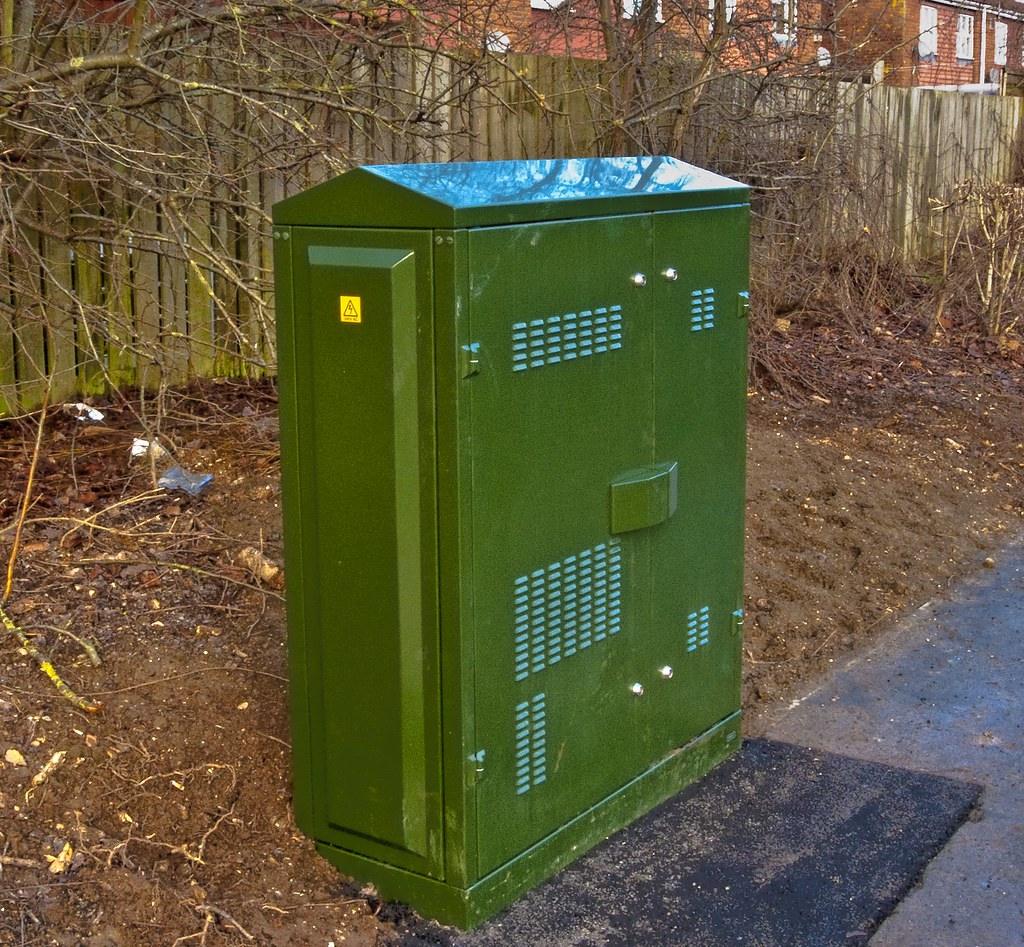
If you are moving business premises anywhere in KwaZulu-Natal, check the fibre before you sign, not after. It takes a few minutes and it is one of the very few things about a new building you cannot fix later with money.
Coverage really does change street by street
People assume that because an area has fibre, a building in that area has fibre. It does not work like that. Networks are built out street by street, and the boundaries between them can run down the middle of a road. We have seen a business park where two networks serve one side and the other side has nothing at all.
Business estates and older industrial parks are the ones that catch people most often. A body corporate may have signed an exclusive arrangement with a single provider years ago, or the trenching may have stopped at the entrance because nobody inside wanted to pay for the rest. The building looks modern. The connectivity is from 2014.
What to actually check
- The exact address, not the area. Street number included. “Pinetown” tells you nothing useful.
- All the networks, not one. Openserve, Vumatel, Frogfoot, MetroFibre, DFA and LinkLayer all cover different parts of KZN, and a building served by none of them on one checker may be well covered on another.
- Live versus planned. A coverage map showing an address as planned or under construction is not a date. Build schedules move by months and occasionally by years. Never sign a lease against a planned status.
- Business versus home products. Some addresses only have residential-grade coverage available. That may be fine, but you should know it before you commit, because the service levels and the upload speeds are different.
- How the cable enters the building. Even with a network in the street, someone has to get fibre from the boundary to your suite. In multi-tenant buildings this needs landlord permission, and sorting that out after you have moved in is slow.
Ask the landlord the right questions
Before signing, get answers in writing on whether there is an existing fibre connection into the building, which providers are already serving other tenants, whether there is any exclusivity arrangement in place, and who pays for the internal cabling if a new line has to be pulled. That last one has a habit of becoming an expensive surprise.
If the answer turns out to be no
It is not always fatal. Fixed LTE or 5G can carry a small office adequately, and a microwave link is a genuine option in some parts of KZN. Both cost more per gigabyte than fibre and behave differently under load, so the honest answer is that they work, with caveats you should understand before you rely on them. A fibre build to an uncovered address is also sometimes possible, but expect it to be quoted per metre of trenching and to take months.
Send us the address you are considering and we will check it across every network we work with and tell you what is genuinely available there — whether you end up using us or not. We would rather give you a straight answer now than get the call in month two of a three-year lease.